
Overflights Data Tailored to Your Neighborhood

How are overflights affecting you?

The number, type, and sometimes altitudes of flights over your location can vary by the day, or even by the hour! From the frequency of overflights to the average overflight altitude, we aim to give you a clear picture of how overflights commonly affect your area.

How are areas affected differently?

There are a number of factors that influence the frequency and position of overflights:

  • The number and frequency of flights will vary on a daily, weekly, and yearly basis due to differences in airline schedules. The airlines schedule flights in response to consumer demand. This is particularly the case around holiday periods.
  • The runway in use at any given time will also vary, largely due to the wind conditions. Each runway has its own set of flight paths, and each flight path will affect different areas. As the runway in use changes, the flight paths change, and so too do the areas affected.
  • The altitude of aircraft can vary due to a number of factors. It could depend on which airport the flight is going to, or from and whether it is an arrival or departure. Arrivals are typically following a steady descent to the runway whilst departures are typically following a steeper path as they climb away from the runway.

Interested to know how we calculate overflights?

How Have Traffic Levels Changed in Your Area?

see how the number of flights over your area has varied throughout the years. 

Oakland San Francisco Bay Airport (OAK) has grown steadily through most of the twenty-first century to meet the increase in travel demand from Bay Area residents.

Recently, the COVID-19 Pandemic put a halt to activities around the world and dramatically affected the air travel industry. As we all settle into our normal activities once again, we will be seeing the high volume of air traffic return once again.

Has aircraft noise changed?

Luckily, while air travel demand has grown, modern aircraft produce far less noise than older aircraft: producing around 90% less noise than the aircraft which were operating in the 1960s.

That being said, as the demand to travel grows, so does the industry and prior to the Covid-19 Pandemic, air travel was reaching an all-time high. So whilst the aircraft that were operating were quiet, there were a lot more aircraft operating.

The Covid-19 pandemic changed that. COVID-19 had a large impact on the aviation industry with measures to control the pandemic resulting in a near-cease in operations. The reaction to contain the virus dramatically reduced noise levels caused by aircraft and community activities and set a new baseline for what is quiet in many areas.

After experiencing quieter-than-normal noise levels, returning noise from aircraft and community activities may seem louder or more frequent than what was experienced before the pandemic. So while air traffic has not yet returned to or passed pre-COVID levels, the noise may seem that way to residents.

Quarterly Overflights Dashboard

The dashboard below allows you to track just how many aircraft are overflying your area compared to previous years. The data below shows the total amount of aircraft above your area each quarter compared to the previous 3 years. This data is based on your location, so you can see exactly how many aircraft may have affected you in recent years compared to the present.

Interested to know how we calculate overflights?
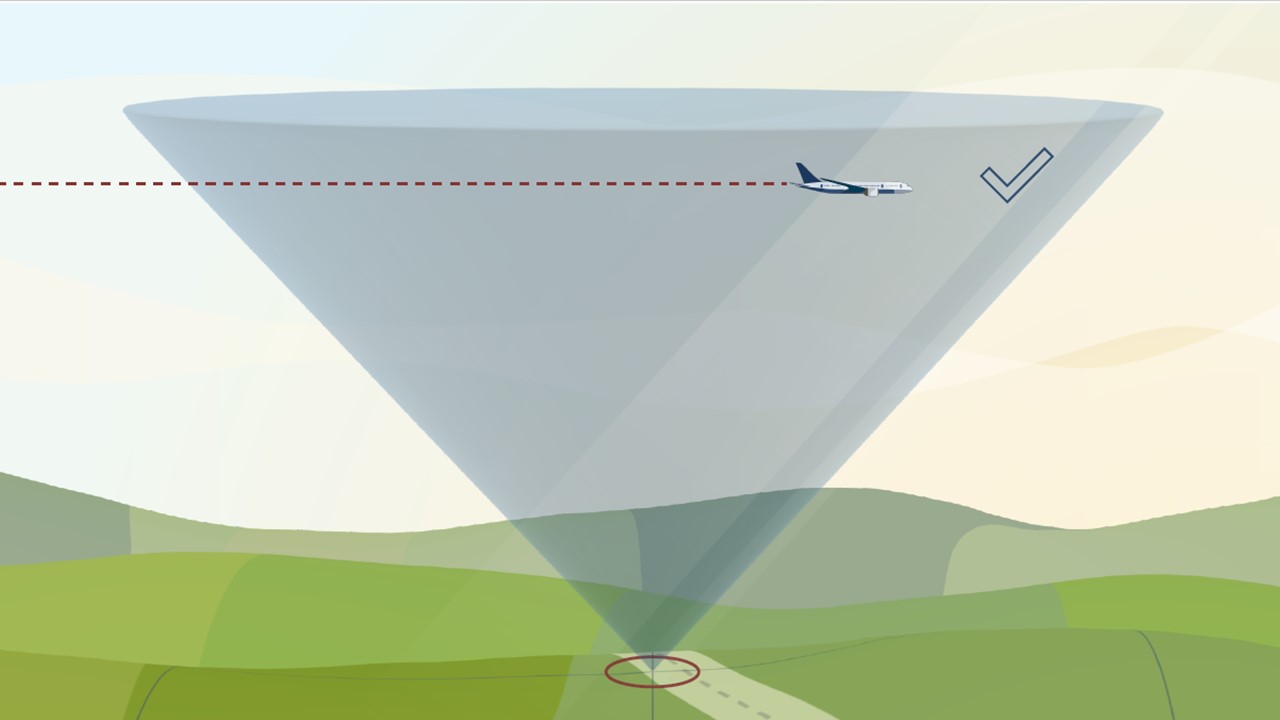
How we calculate an overflight

An aircraft flies within the analysis cone and is successfully counted

The following video explains how our system calculates location-specific data used on this website:

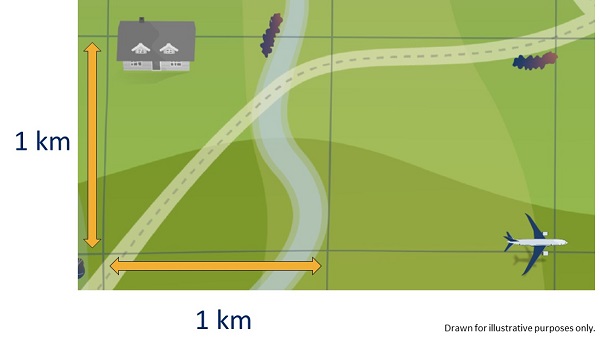
1km x 1km grid over the local area to show how we divide up our analysis

The Grid

To be able to analyze the number of flights over an area around the airport, we have created a grid of identically sized, 1 kilometre by 1 kilometre squares. In total, the grid extends for 95 kilometres around the runways, ranging from certain identified towns and landmarks.

How we count the number of overflights

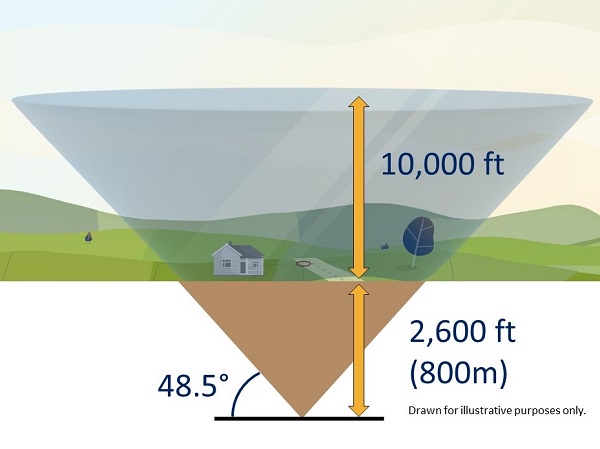
We start by drawing a cone at the corner of each grid. Using the location that you provided when you entered the site, we determine the nearest cone to you.

We use a cone because research undertaken by the United Kingdom Civil Aviation Authority identified that a cone best aligns with how we determine if an aircraft has overflown a location or not.

The 48.5-degree angle of the cone was selected as it incorporates an evaluation of noise, in that if one aircraft flew directly above the observer, followed by a second aircraft off to the side along the 48.5 degree line, the second aircraft would be 3 decibels quieter than the first.

Flights that pass through each cone are recorded and that data is presented on this website.

To avoid underestimating the flights in each area and to fully cover all locations in our grid, we lower the cone 2,600 feet (800 metres) into the ground. The cone extends up to 10,000 feet (3 kilometres) above local ground level and at the very top, the cone is over 6 kilometres wide.

A cone extending up from the 800m underground to 10,000ft to show the areas which we calculate overflights

Where does the data come from?

All data used in our system comes directly from our Aircraft Noise and Operations Monitoring System (ANOMS), which receives flight data from air traffic control radar.