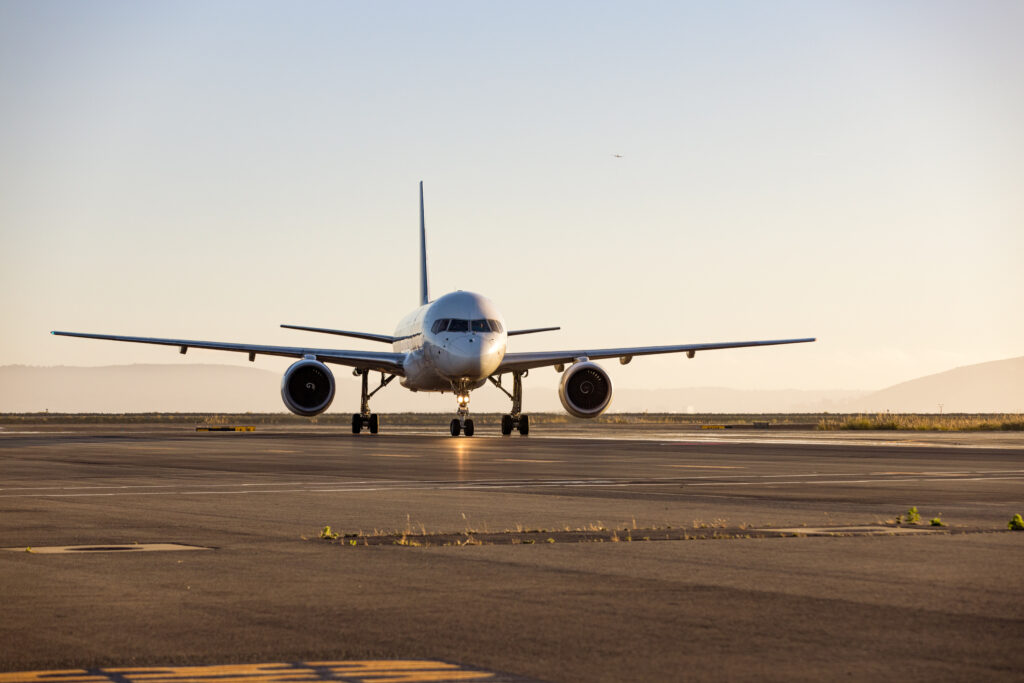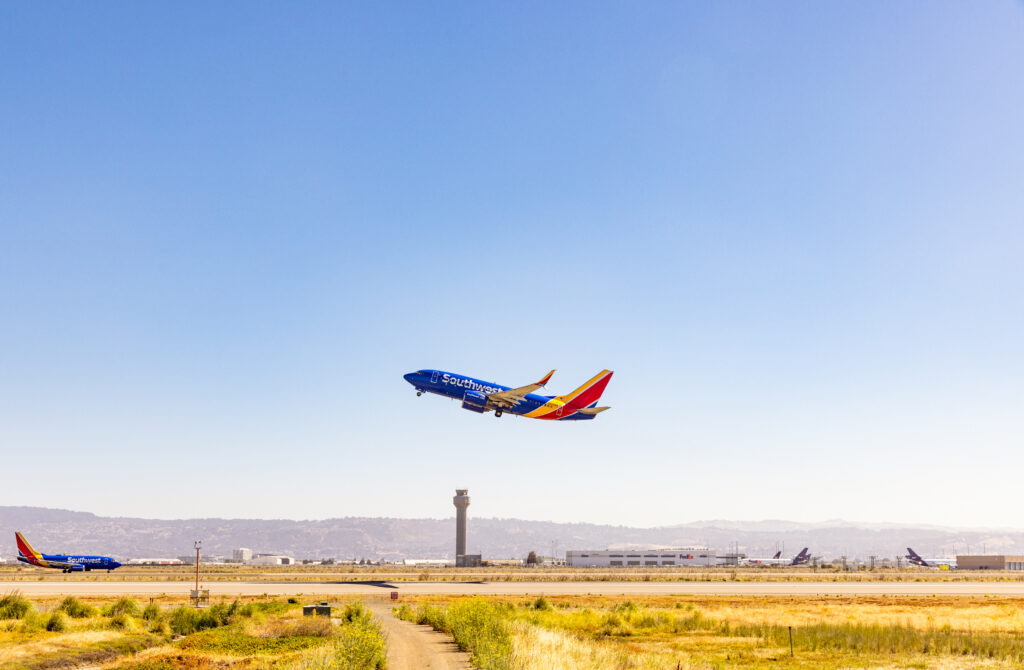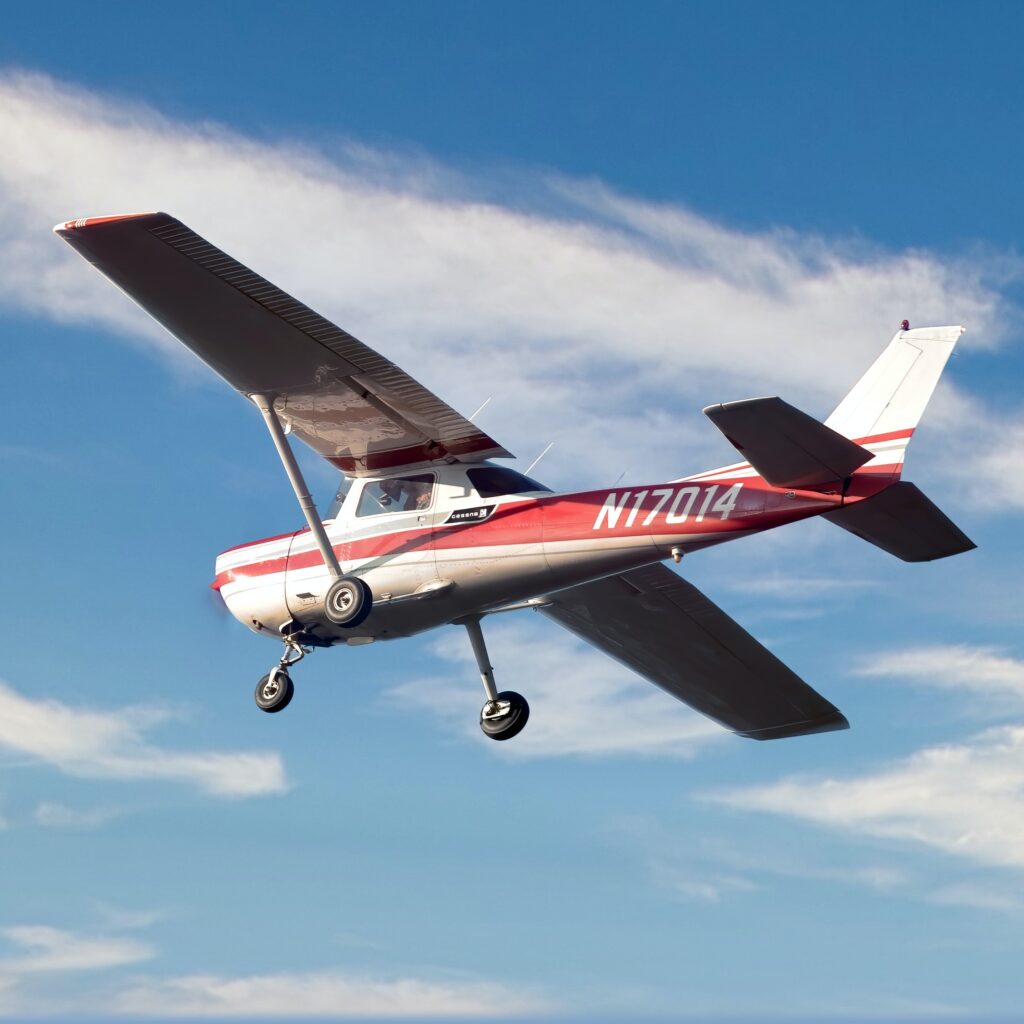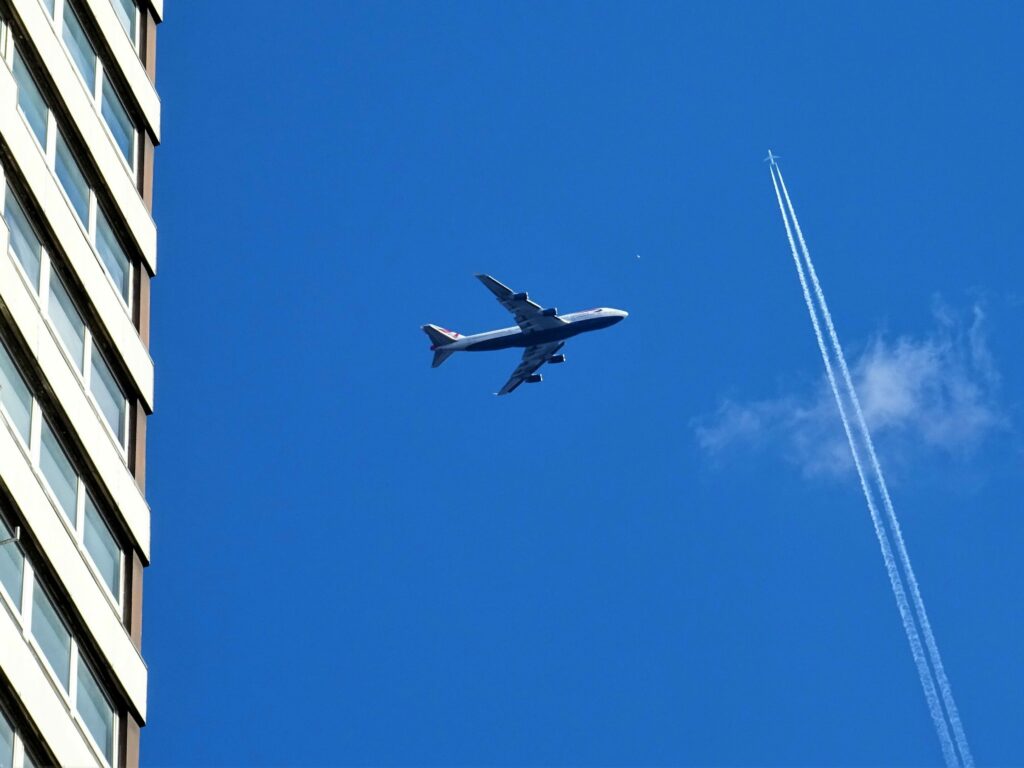

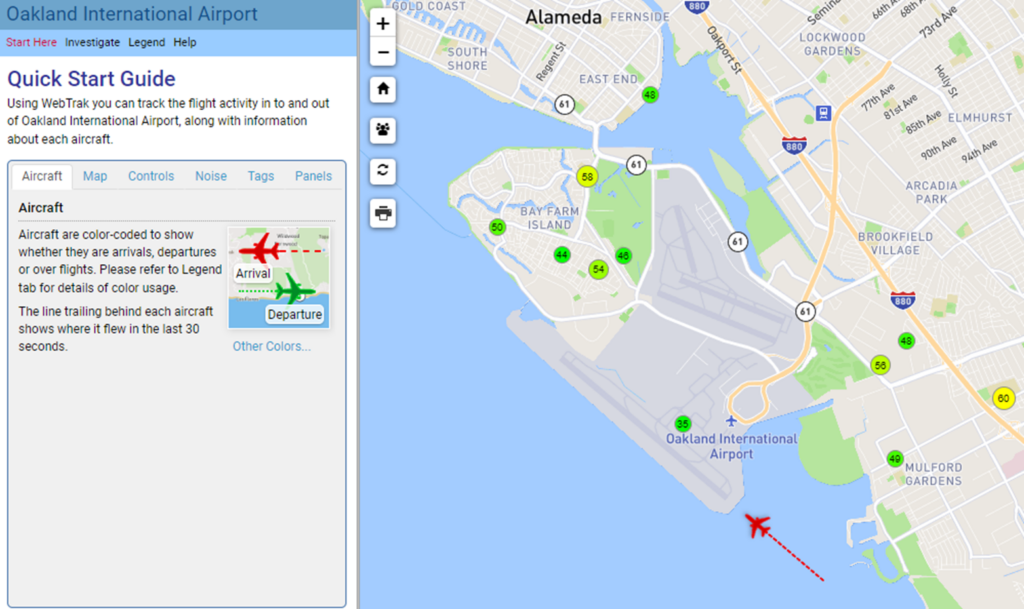
our online flight tracking tool provides users with Near-real-time flight tracks and more!

WebTrak displays noise monitor readings and flight tracks with pop-up information tags to drill down and gain more information about a noise event. View the current noise readings and recent noise levels and also show aircraft information such as tail number, aircraft type, origin and destination airports, and altitude. You can also report click on an aircraft and submit a noise report on that flight directly!

What can it do?

WebTrak, our online flight tracker, provides users with important information about overflights and noise monitor readings that are currently in your area. With Webtrak, you can:

See flights, noise levels, and weather in near real-time.

Discover more information about a flight.

Confirm operational flow usage at the airport.

Identify the flight that caused a disturbance.

Review historical flight tracks and noise readings.

Analyze the proximity of flights to your location.

Learn how to investigate aircraft noise events.

Submit a noise complaint on an overflight.

Display rainfall layers to analyze trends.

How does it work?

WebTrak, allows you to both investigate flights above your area in near real-time as well as investigate historical data.

The web app uses data taken directly from air traffic control (ATC) radar, this is the same data that ATC uses to safely manage aircraft in the sky. It is fed directly into the Airport Noise Monitoring and Management System (ANOMS) which powers the flight tracking systems.

Please note: A small delay is applied to the replay of ‘live’ data to ensure all data is presented as accurately as possible.
I can’t see the flight that disturbed me

Webtrak takes a feed directly from Air Traffic Control (ATC) and whilst we aim to display all flights, you may notice that some are missing. This could be down to a number of reasons including:

  • If it was a military, police, or civil protection flight
  • If the aircraft was carrying a Government or Head of State
  • If the aircraft was operating to/from or flying overhead the airport

Use WebTrak to Submit Noise Complaints

If you feel the aircraft was operating outside normal procedures, you can make a complaint about the flight and it will be sent to us for review. This method helps us because we can immediately identify the aircraft that caused the complaint.

What Type of Aircraft Operations Affect You?

Are you affected by overflights? understand what these overflights are and why they are in your area.

The term “overflight” refers to the flight of an aircraft over a particular area. In today’s modern age, overflights can be common in all areas, but they are especially common near airports. The San Francisco Bay Area is home to 3 major airports as well as many small airports, so overflights are common throughout the region. If you are affected by overflights in your area, it is important to understand what these overflights are and why they are in your area before we can work together to come up with helpful solutions to aircraft noise issues.

What affects your area on a standard weather day?

SJC Aircraft Operations at Various Altitudes.

Based on your location, you are more likely to be affected by San Jose International Airport (SJC) aircraft because they are typically more frequent and or at lower altitudes than other airport traffic that commonly passes over your area. However, SJC is a major Bay Area Airport with complex airspace that is intertwined with Oakland San Francisco Bay Airport (OAK) and San Francisco International Airport (SFO) airspace, so it is possible to be affected by more than one Bay Area Airport.

To find more information on SJC’s operations and flight patterns, view the SJC Noise Website.

Want to see more?

View live flight tracks and noise levels using our WebTrak Flight and Noise tracker.

What Type of Aircraft Operations Affect You?

Are you affected by overflights? understand what these overflights are and why they are in your area.

The term “overflight” refers to the flight of an aircraft over a particular area. In today’s modern age, overflights can be common in all areas, but they are especially common near airports. The San Francisco Bay Area is home to 3 major airports as well as many small airports, so overflights are common throughout the region. If you are affected by overflights in your area, it is important to understand what these overflights are and why they are in your area before we can work together to come up with helpful solutions to aircraft noise issues.

What affects your area on a standard weather day?

SFO Airline Operations at Various Altitudes.

Based on your location, you are more likely to be affected by aircraft operating out of San Francisco International (SFO) because they are typically more frequent and or at lower altitudes than other airport traffic that commonly passes over your area. However, SFO is a major Bay Area Airport with very complex airspace that is intertwined with Oakland San Francisco Bay Airport (OAK) and San Jose International Airport (SJC) airspace, so it is possible to be affected by more than one Bay Area Airport.

To find more information on SFO’s operations and flight patterns, view the SFO Noise Website.

Want to see more?

View live flight tracks and noise levels using our WebTrak Flight and Noise tracker.

What Type of Aircraft Operations Affect You?

Are you affected by overflights? understand what these overflights are and why they are in your area.

The term “overflight” refers to the flight of an aircraft over a particular area. In today’s modern age, overflights can be common in all areas, but they are especially common near airports. The San Francisco Bay Area is home to 3 major airports, including Oakland San Francisco Bay Airport (OAK), as well as many small airports, so overflights are common throughout the region. If you are affected by overflights in your area, it is important to understand what these overflights are and why they are in your area before we can work together to come up with helpful solutions to aircraft noise issues.

What type of flights effect your area on a standard weather day?

OAK Airline Arrivals Medium-to-Low Altitudes.

On a standard weather day, OAK airline arrival flights from the north travel south toward the airport on the WNDSR arrival path. This path travels down the East Bay from Richmond to Castro Valley before turning to line up for landing at OAK. It is common to see jet aircraft on this path travel in a precise stream over the Hills at reduced power and precise altitudes.

OAK and SFO Departures at Medium-to-High Altitudes.

Your area is also commonly affected by airline departures out of OAK and the San Francisco International Airport (SFO) with destinations to the east or northeast. On a standard weather day, OAK departures take off facing the north and, depending on their destination and when they are cleared by Air Traffic Control to turn, some may turn eastbound and overfly your area. SFO departures that take off to the north and head to the east or northeast fly in a similar direction to the OAK departures, and both SFO and OAK eastbound departures will end up spread out over the northern East Bay as they fly towards their destinations.

Want to see more?

View live flight tracks and noise levels using our WebTrak Flight and Noise tracker.

What Type of Aircraft Operations Affect You?

Are you affected by overflights? understand what these overflights are and why they are in your area.

The term “overflight” refers to the flight of an aircraft over a particular area. In today’s modern age, overflights can be common in all areas, but they are especially common near airports. The San Francisco Bay Area is home to 3 major airports, including Oakland San Francisco Bay Airport (OAK), as well as many small airports, so overflights are common throughout the region. If you are affected by overflights in your area, it is important to understand what these overflights are and why they are in your area before we can work together to come up with helpful solutions to aircraft noise issues.

What affects your area on a standard weather day?

OAK Aircraft Training Operations at Low Altitudes.

One of the most common training elements is practicing takeoff and landing. To practice, aircraft often complete this procedure several times, flying a circuit or lap around the airport between each landing and take-off to gain experience and familiarity with these procedures. This type of circuit training is often referred to as a ‘touch-and-go’ or ‘pattern work’ because of the nature of not coming to a full stop on a runway so as to more easily do more circuits around the traffic pattern.

Want to see more?

View live flight tracks and noise levels using our WebTrak Flight and Noise tracker.

What Type of Aircraft Operations Affect You?

Are you affected by overflights? understand what these overflights are and why they are in your area.

The term “overflight” refers to the flight of an aircraft over a particular area. In today’s modern age, overflights can be common in all areas, but they are especially common near airports. The San Francisco Bay Area is home to 3 major airports as well as many small airports, so overflights are common throughout the region. If you are affected by overflights in your area, it is important to understand what these overflights are and why they are in your area before we can work together to come up with helpful solutions to aircraft noise issues.

What affects your area on a standard weather day?

OAK Small Jet and Propellor Aircraft Arrivals at Low Altitudes.

On a standard weather day, smaller jet and propellor aircraft overfly parts of Hayward, San Lorenzo, and Ashland as they are landing into one of Oakland San Francisco Bay Airport (OAK) north field runways. It is common to see these aircraft turn near the 880 – 580 Freeway Interchange to align onto a straight path into OAK’s North Field Runways.

What about on a non-standard weather day?

OAK Small Jet and Propellor Aircraft Departures at Low Altitudes.

In non-standard weather, when the winds shift to the south or southeast – about 10% of the year, you may find that your area is affected by a very different set of aircraft operations. Aircraft need to land and take off into the wind for safety reasons, which requires a change in aircraft flow at OAK and other nearby airports that may be affected. Often, this change results in a flip of the standard airspace flow. So, instead of being affected by small aircraft arrivals into OAK, you will likely be affected by small aircraft departing from OAK.

During non-standard weather, OAK departures take off facing south, then turn towards their destinations as directed by ATC. These turns do not occur at precise locations, so the departing aircraft are often spread out across Hayward, San Lorenzo, and Ashland.

Want to see more?

View live flight tracks and noise levels using our WebTrak Flight and Noise tracker.

What Type of Aircraft Operations Affect You?

Are you affected by overflights? understand what these overflights are and why they are in your area.

The term “overflight” refers to the flight of an aircraft over a particular area. In today’s modern age, overflights can be common in all areas, but they are especially common near airports. The San Francisco Bay Area is home to 3 major airports, including Oakland San Francisco Bay Airport (OAK), as well as many small airports, so overflights are common throughout the region. If you are affected by overflights in your area, it is important to understand what these overflights are and why they are in your area before we can work together to come up with helpful solutions to aircraft noise issues.

What affects your area on a standard weather day?

OAK Airline Arrivals at Medium-to-Low Altitudes.

On a standard weather day, OAK airline arrival flights turn to line up for landing over Hayward, Union City, and Fremont areas to align onto a straight approach path into the runway. It is common to see jet aircraft spread out across these cities as they transition onto the approach path.

What about on a non-standard weather day?

OAK Airline Departures at medium-to-low altitudes.

In non-standard weather, when the winds shift to the south or southeast – about 10% of the year, you may find that your area is affected by a very different set of aircraft operations. Aircraft need to land and take off into the wind for safety reasons, which requires a change in aircraft flow at OAK and other nearby airports that may be affected. Often, this change results in a flip of the standard airspace flow. So, instead of being affected by arrivals into OAK, you will likely be affected by jet aircraft departing from OAK.

During non-standard weather, OAK departures take off facing south, then turn towards their destinations as directed by ATC. These turns do not occur at precise locations, so the departing aircraft are often spread out across Hayward, Union City, and Fremont.

Want to see more?

View live flight tracks and noise levels using our WebTrak Flight and Noise tracker.

What Type of Aircraft Operations Affect You?

Are you affected by overflights? understand what these overflights are and why they are in your area.

The term “overflight” refers to the flight of an aircraft over a particular area. In today’s modern age, overflights can be common in all areas, but they are especially common near airports. The San Francisco Bay Area is home to 3 major airports, including Oakland San Francisco Bay Airport (OAK) and the San Francisco International Airport (SFO), as well as many small airports, so overflights are common throughout the region. If you are affected by overflights in your area, it is important to understand what these overflights are and why they are in your area before we can work together to come up with helpful solutions to aircraft noise issues.

What affects your area on a standard weather day?

OAK and SFO Airline Departures at Medium-to-Low Altitudes.

On a standard weather day, OAK departures take off facing north towards Alameda, Bay Farm Island, and Oakland. It is common to see larger jets just off the coast of these cities over the bay and (depending on their destination and when they are cleared by Air Traffic Control to turn) some may turn eastbound and overfly these cities.

In addition, SFO departures heading north or east can commonly fly over these cities as they head toward their destinations.

What about on a non-standard weather day?

OAK and SFO Airline Arrivals at Medium-to-Low Altitudes.

In non-standard weather, when the winds shift to the south or southeast – about 10% of the year, you may find that your area is affected by a very different set of aircraft operations. Aircraft need to land and take off into the wind for safety reasons, which requires a change in aircraft flow at OAK and other nearby airports that may be affected. Often, this change results in a flip of the standard airspace flow. So, instead of being affected by departures, you will be affected by arrivals.

In the case of your area, OAK jet arrivals commonly travel in a precise, straight line over the bay to land facing south. In addition, SFO arrivals that are affected by the non-standard weather may traverse your area as well as they turn south over Berkeley, Oakland, and Alameda to line up for landing at SFO.

Want to see more?

View live flight tracks and noise levels using our WebTrak Flight and Noise tracker.

What Type of Aircraft Operations Affect You?

Are you affected by overflights? understand what these overflights are and why they are in your area.

The term “overflight” refers to the flight of an aircraft over a particular area. In today’s modern age, overflights can be common in all areas, but they are especially common near airports. The San Francisco Bay Area is home to 3 major airports, including Oakland San Francisco Bay Airport (OAK) and the San Francisco International Airport (SFO), as well as many small airports, so overflights are common throughout the region. If you are affected by overflights in your area, it is important to understand what these overflights are and why they are in your area before we can work together to come up with helpful solutions to aircraft noise issues.

What affects your area on a standard weather day?

OAK and SFO Airline Departures at Medium-to-High Altitudes.

On a standard weather day, OAK Airline departures take off over the bay facing the north, then eventually are directed to turn toward their destinations when approved by an Air Traffic Controller. SFO aircraft can also take off towards the bay in standard weather and are similarly directed as the OAK departures. It is common to see OAK and SFO departures that head south or west to fly over the San Francisco Peninsula and those that head north or east to fly over most of the East Bay area.

What about on a non-standard weather day?

OAK and SFO Airline Arrivals at Medium-to-Low Altitudes.

In non-standard weather, when the winds shift to the south or southeast – about 10% of the year, you may find that your area is affected by a very different set of aircraft operations. Aircraft need to land and take off into the wind for safety reasons, which requires a change in aircraft flow at OAK and other nearby airports that may be affected. Often, this change results in a flip of the standard airspace flow. So, instead of being affected by departures heading away from the Bay Area, you will likely be affected by arrivals heading into the Bay Area Airports.

Want to see more?

View live flight tracks and noise levels using our WebTrak Flight and Noise tracker.

What Type of Aircraft Operations Affect You?

Are you affected by overflights? understand what these overflights are and why they are in your area.

The term “overflight” refers to the flight of an aircraft over a particular area. In today’s modern age, overflights can be common in all areas, but they are especially common near airports. The San Francisco Bay Area is home to 3 major airports as well as many small airports, so overflights are common throughout the region. If you are affected by overflights in your area, it is important to understand what these overflights are and why they are in your area before we can work together to come up with helpful solutions to aircraft noise issues.

What affects your area on a standard weather day?

Various Aircraft Overflights

Your area is not likely to be under an established flight path associated with a Bay Area Airport, but you may still be affected by overflights. These may be overflights from small propellor aircraft traversing the area or high-altitude jet aircraft traveling between airports. They are often irregular, meaning one day may have noticeably more overflights than another.

Want to see more?

View live flight tracks and noise levels using our WebTrak Flight and Noise tracker.