

Here to report aircraft noise?

Have a question or comment?

Here to report aircraft noise?
Have a question or comment?

developing programs that minimize noise impacts on surrounding communities
For more than 40 years, the Port of Oakland has endeavored to develop programs that minimize noise impacts on surrounding communities. Noise abatement procedures (NAP) at Oakland San Francisco Bay Airport (OAK) are based on the voluntary actions that air traffic controllers and pilots may take to help reduce the impacts of aircraft noise on communities adjacent to the airport. The airport has no authority over the movement of aircraft or the direction of flight. The authority to regulate flight patterns of aircraft is vested exclusively in the Federal Aviation Administration (FAA).
The following are general guidelines and techniques we ask operators to follow to help minimize the noise impact produced by aircraft in your area.
SFO Noise Mitigation
Based on your location, you are more likely to be affected by aircraft operating out of the San Francisco International Airport (SFO). SFO might have noise abatement efforts in place that may more significantly help reduce noise in your area. For information about noise abatement at SFO, you can visit the SFO Aircraft Noise website.

Want to see more?
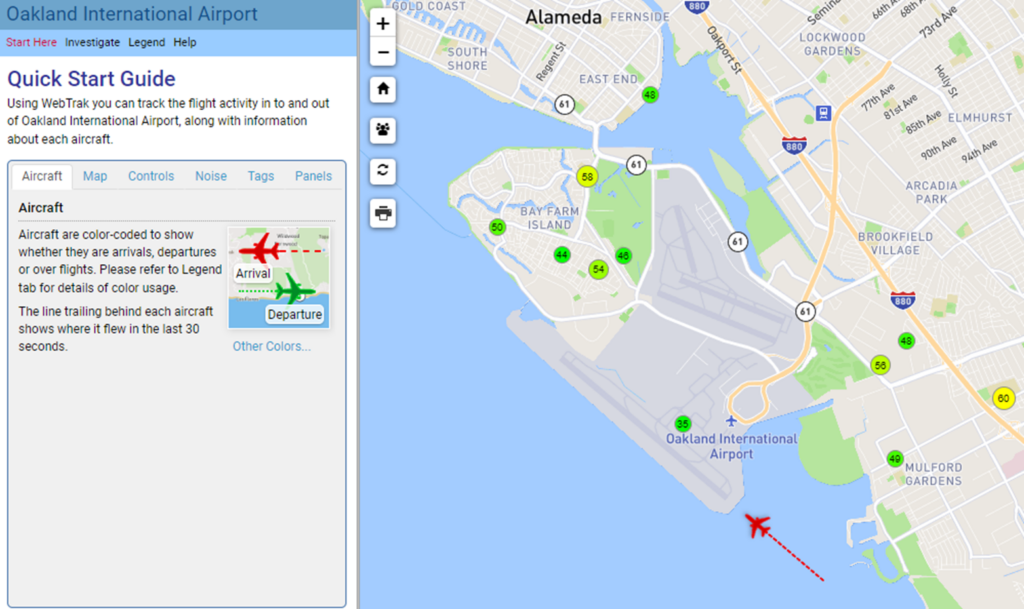
View live flight tracks and noise levels using our WebTrak Flight and Noise tracker.

our online flight tracking tool provides users with Near-real-time flight tracks and more!
WebTrak displays noise monitor readings and flight tracks with pop-up information tags to drill down and gain more information about a noise event. View the current noise readings and recent noise levels and also show aircraft information such as tail number, aircraft type, origin and destination airports, and altitude. You can also report click on an aircraft and submit a noise report on that flight directly!
What can it do?
WebTrak, our online flight tracker, provides users with important information about overflights and noise monitor readings that are currently in your area. With Webtrak, you can:

See flights, noise levels, and weather in near real-time.

Discover more information about a flight.

Confirm operational flow usage at the airport.

Identify the flight that caused a disturbance.

Review historical flight tracks and noise readings.

Analyze the proximity of flights to your location.

Learn how to investigate aircraft noise events.

Submit a noise complaint on an overflight.

Display rainfall layers to analyze trends.
How does it work?
WebTrak, allows you to both investigate flights above your area in near real-time as well as investigate historical data.
The web app uses data taken directly from air traffic control (ATC) radar, this is the same data that ATC uses to safely manage aircraft in the sky. It is fed directly into the Airport Noise Monitoring and Management System (ANOMS) which powers the flight tracking systems.
Please note: A small delay is applied to the replay of ‘live’ data to ensure all data is presented as accurately as possible.
I can’t see the flight that disturbed me
Webtrak takes a feed directly from Air Traffic Control (ATC) and whilst we aim to display all flights, you may notice that some are missing. This could be down to a number of reasons including:

Use WebTrak to Submit Noise Complaints
If you feel the aircraft was operating outside normal procedures, you can make a complaint about the flight and it will be sent to us for review. This method helps us because we can immediately identify the aircraft that caused the complaint.

Are you affected by overflights? understand what these overflights are and why they are in your area.
The term “overflight” refers to the flight of an aircraft over a particular area. In today’s modern age, overflights can be common in all areas, but they are especially common near airports. The San Francisco Bay Area is home to 3 major airports as well as many small airports, so overflights are common throughout the region. If you are affected by overflights in your area, it is important to understand what these overflights are and why they are in your area before we can work together to come up with helpful solutions to aircraft noise issues.

What affects your area on a standard weather day?

Various Aircraft Overflights
Your area is not likely to be under an established flight path associated with a Bay Area Airport, but you may still be affected by overflights. These may be overflights from small propellor aircraft traversing the area or high-altitude jet aircraft traveling between airports. They are often irregular, meaning one day may have noticeably more overflights than another.
Want to see more?
View live flight tracks and noise levels using our WebTrak Flight and Noise tracker.



Want to be notified of weather changes and noise abtatement initiatives?

How are overflights affecting you?
The number, type, and sometimes altitudes of flights over your location can vary by the day, or even by the hour! From the frequency of overflights to the average overflight altitude, we aim to give you a clear picture of how overflights commonly affect your area.
How are areas affected differently?
There are a number of factors that influence the frequency and position of overflights:

Interested to know how we calculate overflights?

Want to learn more about aviation?
Explore helpful topics below to expand your knowledge and better understand how the industry functions through Oakland San Francisco Bay Airport (OAK)., the San Francisco Bay Area, and beyond!
What is airspace?
To most people, the air above is just open space. But did you know that the air above you is actually defined and divided into different airspace regions that help guide safe aircraft operations?

What is noise?
Noise is a more complicated subject than you might think. There are many different factors that play into our daily soundscape and influence which sounds people might find annoying and ultimately classify as noise.

What affects the way I hear aircraft noise?
It is generally known that aircraft are loud machines, and sometimes this noise impacts our daily lives more than we would like. Have you ever wondered if there was more to it than that?

Aircraft Noise 101
This crash course presentation gives you an overview of what noise is and how it’s measured, important aircraft noise regulations, and an overview of OAK’s noise management and its history.
How we calculate overflights
Our Dashboard provides Overflights data over specific areas to show data tailored to your location. Interested to know how we determine which flights flew over your area? Learn how our localized tools work to calculate data personalized to you.
The Skybrary information database
If you want to dig into a wide range of aviation topics you can explore the Skybrary. Initially set up by EUROCONTROL, it provides a broad range of information across various industry topics.
Understanding aviation acronyms
The aviation industry loves acronyms. If you have an acronym that you are struggling to understand then EUROCONTROL’s acronym database may be a good resource for you.

see how the number of flights over your area has varied throughout the years.
Oakland San Francisco Bay Airport (OAK) has grown steadily through most of the twenty-first century to meet the increase in travel demand from Bay Area residents.
Recently, the COVID-19 Pandemic put a halt to activities around the world and dramatically affected the air travel industry. As we all settle into our normal activities once again, we will be seeing the high volume of air traffic return once again.
Has aircraft noise changed?
Luckily, while air travel demand has grown, modern aircraft produce far less noise than older aircraft: producing around 90% less noise than the aircraft which were operating in the 1960s.
That being said, as the demand to travel grows, so does the industry and prior to the Covid-19 Pandemic, air travel was reaching an all-time high. So whilst the aircraft that were operating were quiet, there were a lot more aircraft operating.
The Covid-19 pandemic changed that. COVID-19 had a large impact on the aviation industry with measures to control the pandemic resulting in a near-cease in operations. The reaction to contain the virus dramatically reduced noise levels caused by aircraft and community activities and set a new baseline for what is quiet in many areas.
After experiencing quieter-than-normal noise levels, returning noise from aircraft and community activities may seem louder or more frequent than what was experienced before the pandemic. So while air traffic has not yet returned to or passed pre-COVID levels, the noise may seem that way to residents.
Quarterly Overflights Dashboard
The dashboard below allows you to track just how many aircraft are overflying your area compared to previous years. The data below shows the total amount of aircraft above your area each quarter compared to the previous 3 years. This data is based on your location, so you can see exactly how many aircraft may have affected you in recent years compared to the present.
Interested to know how we calculate overflights?
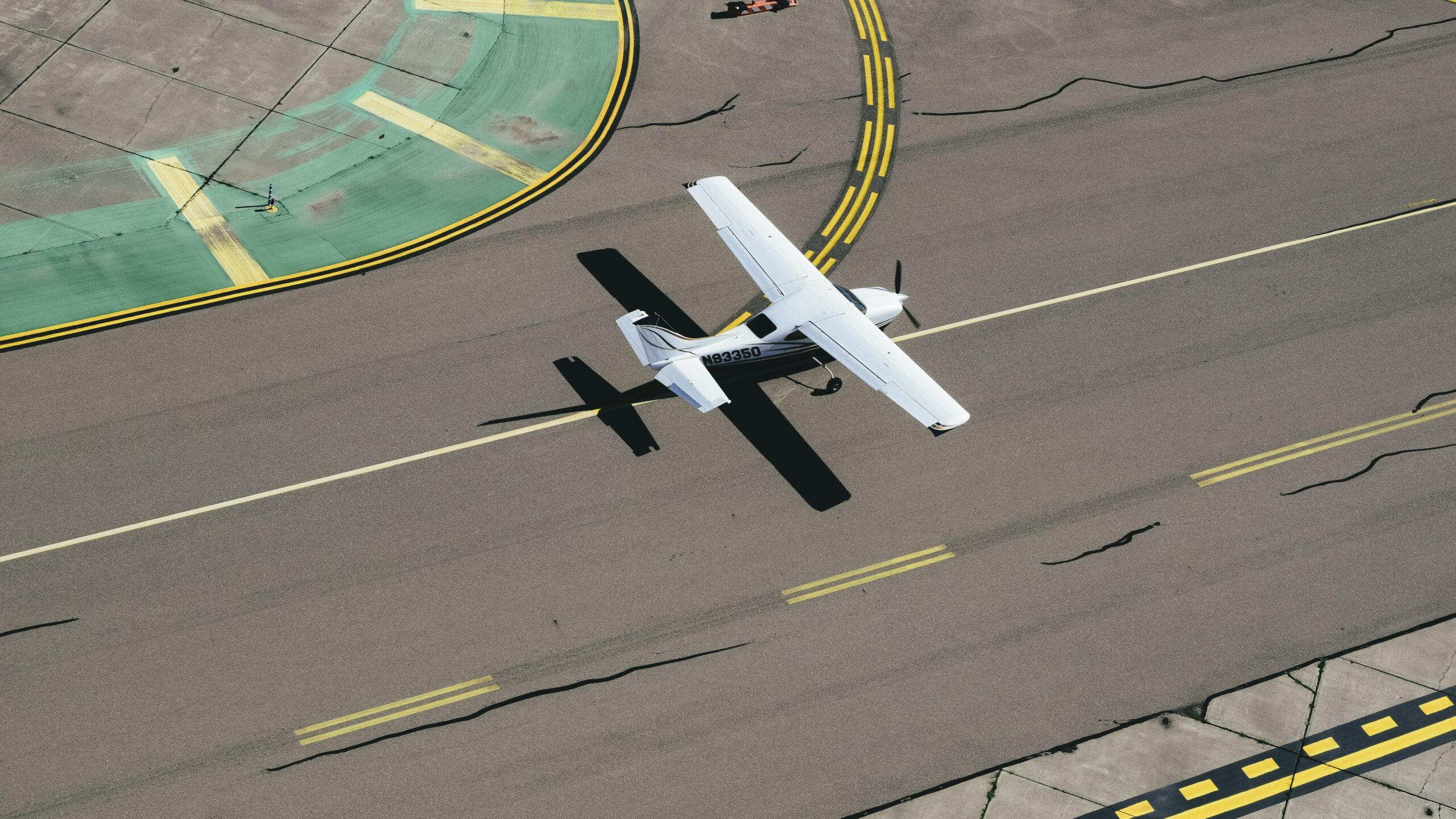
The two sides of the airport are more different than you might think.
Oakland San Francisco Bay Airport (OAK) is a host to a variety of aircraft operations. From airlines to cargo to training pilots, aircraft utilize the airport for a variety of purposes. To provide order and maximize efficiency, the airport has separated these various uses into two separate sides of the airfield: North Field and South Field.
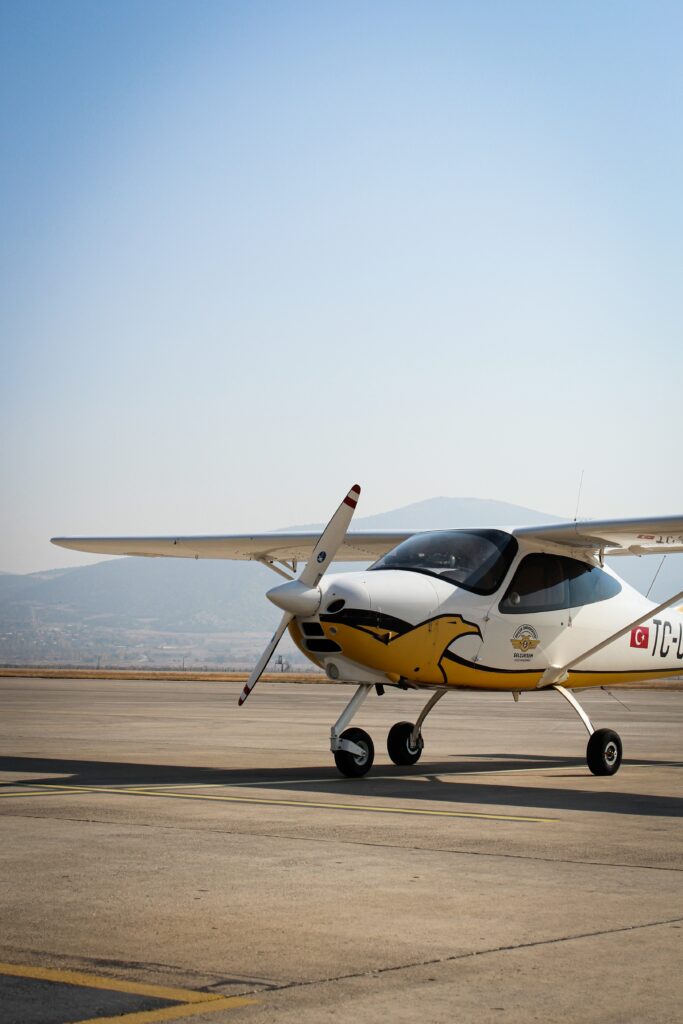
North Field
The North Field accommodates a variety of aviation land uses including general aviation, aircraft hangars, ramps, some air cargo facilities, and two fixed base operators: KaiserAir and Signature Flight, It consists of 3 smaller runways; Runway 10R-28L, Runway 10L-28R, and Runway 15-33, and the helipad. Many small aircraft come and go on these runways, and some may utilize them in a unique way for training purposes.
South Field
The South Field is a complex of passenger facilities, including Terminals 1 and 2, and air cargo facilities, the largest of which is the FedEx Metroplex (their West Coast hub operation). It hosts the largest runway that OAK has to offer; Runway 12-30, which will often be utilized by airlines, business jets, and cargo jets that arrive and depart from OAK.
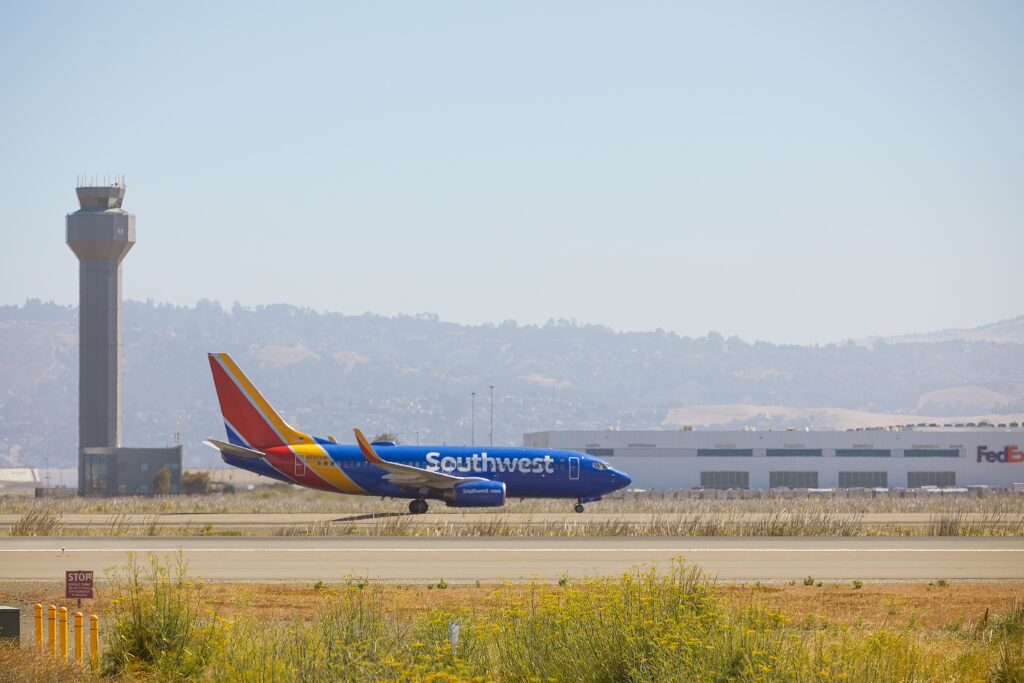
Want to see more?
View live flight tracks and noise levels using our WebTrak Flight and Noise tracker.
File a Noise Complaint: (510) 563-6463 | Powered by InsightFull:  | OAK Noise Complaint App