
Are you affected by overflights? understand what these overflights are and why they are in your area.
The term “overflight” refers to the flight of an aircraft over a particular area. In today’s modern age, overflights can be common in all areas, but they are especially common near airports. The San Francisco Bay Area is home to 3 major airports, including Oakland San Francisco Bay Airport (OAK), as well as many small airports, so overflights are common throughout the region. If you are affected by overflights in your area, it is important to understand what these overflights are and why they are in your area before we can work together to come up with helpful solutions to aircraft noise issues.
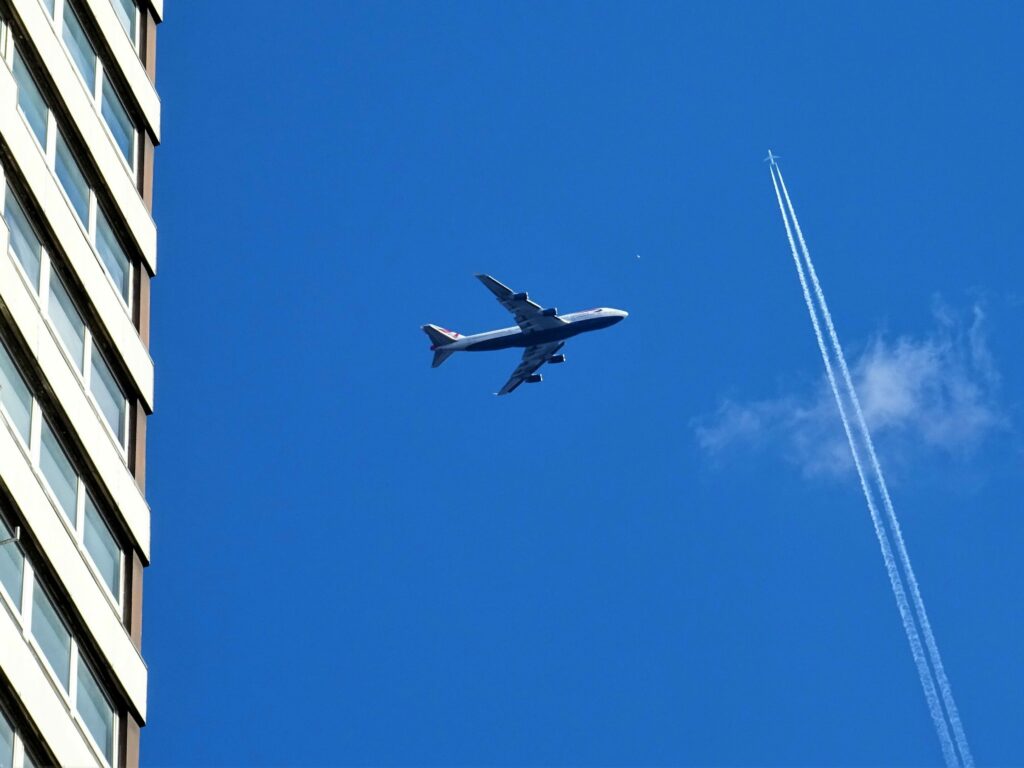
What affects your area on a standard weather day?

OAK Airline Arrivals at Medium-to-Low Altitudes.
On a standard weather day, OAK airline arrival flights turn to line up for landing over Hayward, Union City, and Fremont areas to align onto a straight approach path into the runway. It is common to see jet aircraft spread out across these cities as they transition onto the approach path.
What about on a non-standard weather day?
OAK Airline Departures at medium-to-low altitudes.
In non-standard weather, when the winds shift to the south or southeast – about 10% of the year, you may find that your area is affected by a very different set of aircraft operations. Aircraft need to land and take off into the wind for safety reasons, which requires a change in aircraft flow at OAK and other nearby airports that may be affected. Often, this change results in a flip of the standard airspace flow. So, instead of being affected by arrivals into OAK, you will likely be affected by jet aircraft departing from OAK.
During non-standard weather, OAK departures take off facing south, then turn towards their destinations as directed by ATC. These turns do not occur at precise locations, so the departing aircraft are often spread out across Hayward, Union City, and Fremont.
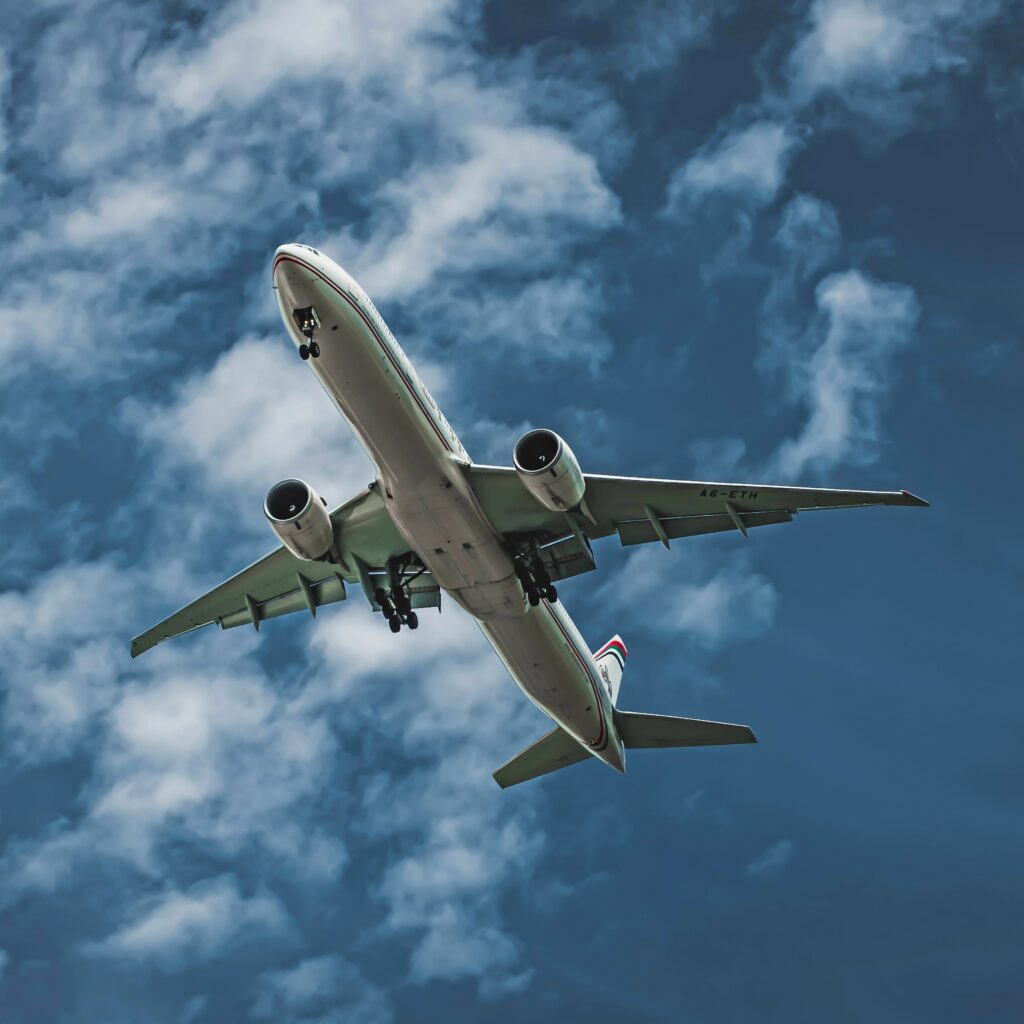

Want to see more?
View live flight tracks and noise levels using our WebTrak Flight and Noise tracker.